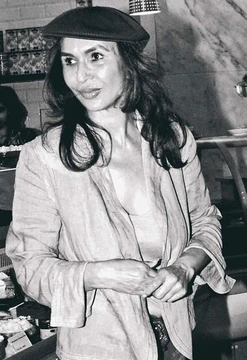
Alva Belmont
Socialite and suffrage activist who challenged convention.

- field
- Women's suffrage activism, social leadership
- nationality
- American
- known_for
- Founding the Political Equality Association, co-founding the National Woman's Party, organizing first White House picketing, building Marble House and other estates
Lore & Background
The Smith family were wealthy slaveholders. She was one of seven children, though two died young.
Reader's Guide
Alva Belmont's significance lies in her dual role as a Gilded Age socialite and a pioneering women's suffrage activist. After her divorce, she became acutely aware of women's precarious positions in marriages and workplaces, which fueled her activism. Her ostentatious displays of wealth also fueled public interest in the lives of the rich and fears of plutocracy.
Did You Know?
- She was elected president of the National Woman's Party and held the office until her death.
- The Belmont-Paul Women's Equality National Monument, established in 2016, is named for Alva Belmont and Alice Paul.
Socialite and Suffragist
Alva Belmont occupied a distinctive position in American public life by embodying two roles that might seem at odds: that of a socialite and that of a leader in the women's rights movement. In the world of Newport, Rhode Island, she was recognized as a figure of high society, moving in circles that included bankers, newspaper publishers, and heirs to vast fortunes. Yet her identity was never confined to the drawing room. She is specifically identified as a leader of the women's rights movement, meaning she took an active, organizing role in advocating for the rights and political participation of women. This dual character placed her at the intersection of elite social life and progressive political action, a combination that gave her a particular vantage point from which to push for change. Her presence in the records of Newport's notable residents underscores that her influence extended beyond a single city or a single cause, rooting her legacy in both the glitter of Gilded Age society and the serious work of reform.
A Newport Resident of the Gilded Age
This was an era in which the coastal town attracted an extraordinary concentration of wealth, culture, and political influence. She shared this community with figures such as the Vanderbilt heirs, the Astor socialite Caroline Webster Schermerhorn, the newspaper publisher James Gordon Bennett Jr., and a constellation of architects, artists, and naval strategists. Her presence in Newport during these three decades places her squarely within the most socially and economically vibrant chapter of the town's history. The fact that she is listed among those who lived or worked there, rather than merely those born there, suggests a deliberate choice to make Newport a base or a significant part of her life. In a town that drew summer residents and permanent inhabitants alike, her inclusion signals a sustained connection to the place and its community of prominent figures.
Among Newport's Progressive Women
Alva Belmont's role as a leader in the women's rights movement did not exist in isolation within Newport. She was part of a broader constellation of women who shaped the town's intellectual and political landscape. Most notably, Alva Vanderbilt, wife of William Kissam Vanderbilt, is also recorded as an early feminist who was active in the women's suffrage movement, and their daughter Consuelo Vanderbilt went on to become the duchess of Marlborough. The presence of multiple women engaged in advocacy for women's rights and suffrage in the same community during the same Gilded Age window suggests that Newport provided a fertile environment for such work. Alva Belmont's specific identification as a leader, as opposed to merely an activist, distinguishes her as someone who organized and directed efforts rather than simply participating. This leadership quality, set against the backdrop of a town that also hosted authors like Edith Wharton and writers like Thornton Wilder, highlights a community where cultural production and political advocacy coexisted and reinforced one another.
Within Newport's Broader Tapestry of Notable Figures
Alva Belmont's place in the historical record of Newport, Rhode Island, is one thread among many in a richly woven tapestry spanning centuries. The town's roster of notable residents stretches from seventeenth-century governors and early settlers through eighteenth-century philosophers and signers of the Declaration of Independence, into nineteenth-century naval heroes and conservationists, and onward into the twentieth century with actors, musicians, and philanthropists. Within this long lineage, Alva Belmont belongs to the Gilded Age cohort, a group that also included financiers, architects of national repute, naval strategists, and the flamboyant socialite Ward McAllister, who reportedly coined the term for New York's elite four hundred. Her inclusion alongside such a diverse array of figures underscores that Newport's significance was never limited to a single domain. She contributed to the town's story in the realm of social leadership and political advocacy, adding a dimension of progressive activism to a community already known for its wealth, its art, and its maritime heritage.
More in Philanthropists And Socialites 1-23
Related in Philanthropists And Socialites
Links follow this subject's own source article.
Spotted an error? Know more?
This is a living reference — every entry is fact-audited, and reader corrections feed straight into our audit queue. Suggest an edit · See this site's audit record