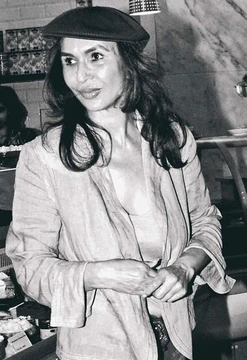
Gertrude Vanderbilt Whitney
Sculptor, patron, and founder of the Whitney Museum of American Art.

Gertrude Vanderbilt Whitney (January 9, 1875 – April 18, 1942) was an American sculptor, art patron and collector, and founder in 1931 of the Whitney Museum of American Art in New York City. She was a prominent social figure and hostess, born into the wealthy Vanderbilt family and married into the Whitney family. Her work as a sculptor includes numerous public monuments, and her patronage supported many American artists.
- born
- January 9, 1875, New York City
- died
- April 18, 1942
- field
- Sculpture, art patronage
- nationality
- American
- known_for
- Founding the Whitney Museum of American Art; monumental public sculptures
Verified Timeline
Lore & Background
Gertrude Vanderbilt was born on January 9, 1875, in New York City, the second daughter of Cornelius Vanderbilt II and Alice Claypoole Gwynne. She grew up in the family's opulent mansion at 742–748 Fifth Avenue and spent summers in Newport, Rhode Island, at The Breakers, where she kept up with the boys in all their rigorous sporting activities. Educated by private tutors and at the Brearley School, she showed early interest in art through small drawings and watercolor paintings in her personal journals. While visiting Europe in the early 1900s, she discovered the art world of Montmartre and Montparnasse, which encouraged her to become a sculptor. She studied at the Art Students League of New York with Hendrik Christian Andersen and James Earle Fraser, and in Paris studied with Andrew O'Connor and received criticism from Auguste Rodin. Her first public commission was Aspiration, a life-size male nude in plaster, shown outside the New York State Building at the Pan-American Exposition in Buffalo in 1901. Initially she worked under an assumed name, fearing she would be portrayed as a socialite and her work not taken seriously. Neither her family nor her husband supported her desire to work seriously as an artist; she told an artist friend, 'Never expect Harry to take your work seriously ... It never has made any difference to him that I feel as I do about art and it never will (except as a source of annoyance).' By 1910, she was exhibiting under her own name. Paganisme Immortel was shown at the 1910 National Academy of Design, Spanish Peasant was accepted at the Paris Salon in 1911, and Aztec Fountain won a bronze medal at the 1915 San Francisco Exhibition. Her first solo show occurred in New York City in 1916.
Reader's Guide
Gertrude Vanderbilt Whitney's significance lies in her dual role as a sculptor and a patron who shaped American art. Her wealth allowed her to support artists, including the Ashcan School, and to finance The Arts magazine in 1922 to prevent its closing, and the International Composer's Guild. She established the Whitney Studio Gallery in 1908 and the Whitney Studio Club in 1914, providing exhibition space, housing, and stipends for young artists. In 1929, she offered the Metropolitan Museum of Art her collection of nearly 700 American modern art works and payment for a wing; when declined, she founded the Whitney Museum of American Art in 1931. As a sculptor, she created numerous public monuments, including the Titanic Memorial in Washington, D.C., unveiled in 1931, considered by critics as the most important achievement in her artistic career, and the Buffalo Bill - The Scout in Cody, Wyoming, dedicated in 1924. Her work during and after World War I included realistic depictions of soldiers and memorials; she established a fully operational hospital for wounded soldiers in Juilly, about 22 miles northwest of Paris. Despite initial criticism of her smaller wartime sculptures, since her death critics have recognized the expert craftsmanship of her smaller works. Her legacy includes advancing women in art, supporting and exhibiting in women-only shows, and ensuring American artists gained recognition.
Did You Know?
- Gertrude Vanderbilt Whitney's first public commission was Aspiration, a life-size male nude in plaster, shown at the Pan-American Exposition in Buffalo in 1901.
- She initially worked under an assumed name because she feared being portrayed as a socialite and not taken seriously as an artist.
- Her brother Alfred Gwynne Vanderbilt perished in the sinking of the RMS Lusitania in 1915.
- The Titanic Memorial in Washington, D.C., unveiled in 1931, was built from a $50,000 prize from a competition she won in 1914.
- The Government of France purchased a marble replica of the head of the Titanic Memorial, now housed in the Musée du Luxembourg.
The Sculptor Behind the Socialite Name
Gertrude Vanderbilt Whitney's path into sculpture was neither inevitable nor welcomed by her inner circle. Born into the Vanderbilt dynasty on January 9, 1875, in New York City, she grew up in the opulent mansion at 742–748 Fifth Avenue and spent summers at The Breakers in Newport, where she kept pace with her brothers in rigorous sporting activities. Her early artistic inclinations surfaced as small drawings and watercolor paintings tucked into her personal journals. It was not until a trip to Europe in the early 1900s, where she encountered the vibrant studios of Montmartre and Montparnasse, that she committed to sculpting as a vocation. She trained at the Art Students League in New York under Hendrik Christian Andersen and James Earle Fraser, and in Paris she studied with Andrew O'Connor while receiving criticism from Auguste Rodin. Crucially, she initially worked under an assumed name, terrified that her Vanderbilt name would reduce her to a socialite and her work to a curiosity. She later told an artist friend that her husband Harry never took her artistic ambitions seriously and found them merely a source of annoyance. By 1910, she was finally exhibiting under her own name, a quiet but hard-won declaration of professional identity. Her first public commission was Aspiration, a life-size male nude in plaster, shown at the Pan-American Exposition in Buffalo in 1901.
War, Grief, and a New Realism
World War I reshaped both Gertrude Whitney's life and her artistic language. She devoted enormous personal resources to establishing and running a fully operational hospital for wounded soldiers in Juilly, about 22 miles northwest of Paris. While tending to those men, she made drawings of the soldiers which became plans for her memorials in New York City. The experience also triggered a marked shift in her sculptural style: where her pre-war work had a much less realistic style, she strayed away from that to give the work a more serious feeling. The war also dealt her a devastating personal blow—her brother Alfred Gwynne Vanderbilt perished in the sinking of the RMS Lusitania in 1915. Her smaller wartime sculptures, which depicted soldiers as nudes, drew criticism during her lifetime, though later critics have recognized the expert craftsmanship within them. She mounted a dedicated show of these war pieces at her Eighth Street Studio in November 1919, and continued exhibiting solo through the 1920s and 1930s, with the majority of her work from that era produced in her Paris studio in Passy. A show at the Art Institute of Chicago ran from March 1 to April 15, 1923, and another in New York City from March 17–28, 1936.
Monuments in Bronze and Stone
Whitney's public commissions spanned three decades and touched cities across the country. Her first major public work, Aspiration—a life-size plaster male nude—stood outside the New York State Building at the 1901 Pan-American Exposition in Buffalo. From there, her sculptural footprint grew steadily: the Aztec Fountain at the Pan American Union Building in Washington, D.C. (1912); the Fountain of El Dorado at the 1915 Panama-Pacific Exposition in San Francisco, which earned a bronze medal; two reliefs on the Victory Arch in Madison Square, New York (1918–1919); the Washington Heights-Inwood War Memorial in Mitchell Square Park, New York City (erected 1922); the Buffalo Bill - The Scout memorial in Cody, Wyoming (dedicated 1924); the Untermyer Memorial at Woodlawn Cemetery, New York City (1925); and the memorial to the four founders of the Daughters of the American Revolution at Constitution Hall in Washington, D.C. (dedicated 1929), an organization of which she was a member. The 1930s brought the Titanic Memorial in Washington, D.C. (unveiled 1931), built from a $50,000 prize from a competition she won in 1914, and the Peter Stuyvesant Monument in New York City (1936–1939). Her final public commission, Spirit of Flight, was created for the 1939 New York World's Fair. She also created the American Expeditionary Forces Memorial in Saint-Nazaire, France (1924) and the Monument to Columbus in Huelva, Spain (1928–1933).
Patron, Collector, and Museum Founder
Beyond her own chisel and clay, Gertrude Whitney shaped the American art world as a patron, collector, and institution-builder. In 1914 she organized the 50-50 Art Sale, her first charity exhibition, establishing a pattern of using her social capital to open doors for other artists. By 1908, she had opened the Whitney Studio Gallery in the same buildings as her own studio on West Eighth Street in Greenwich Village, inviting artists such as Robert Henri and Jo Davidson to showcase their works. In 1914, she established the Whitney Studio Club at 147 West 4th Street as an artists' club where young artists could meet, talk, and exhibit; she provided nearby housing and stipends for living costs. The club expanded when its headquarters moved back to West Eighth Street in 1923. In 1929, Whitney offered the Metropolitan Museum of Art her collection of nearly 700 American modern art works and full payment for a wing; when declined, she founded the Whitney Museum of American Art in 1931, appointing Juliana Force as its first director. The museum aimed to embrace modernism, shifting away from notions that American art was largely rural and narrow in scope. After her death on April 18, 1942, the Whitney Museum held a commemorative show of her works in 1943.
More in Philanthropists And Socialites 1-23
Related in Philanthropists And Socialites
Links follow this subject's own source article.
Spotted an error? Know more?
This is a living reference — every entry is fact-audited, and reader corrections feed straight into our audit queue. Suggest an edit · See this site's audit record