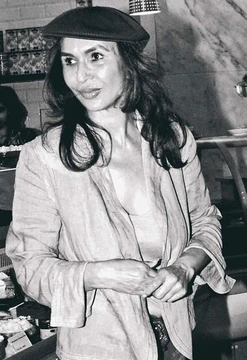
Du Pont family
Prominent American family founded in gunpowder, later chemicals and autos.

Since the mid-19th century, they have been one of the country's richest families, initially building their fortune in the gunpowder business and later expanding into the chemical and automotive industries through the DuPont company, General Motors, and other corporations. The family has also been influential in politics, historic preservation, horticulture, and thoroughbred horse racing.
- founder
- Pierre Samuel du Pont de Nemours
- field
- Gunpowder, chemicals, automotive, horticulture, historic preservation
- nationality
- American (originally French)
- known_for
- DuPont company, General Motors, family wealth, horticultural estates, political influence
Lore & Background
The family maintained wealth through carefully arranged marriages between cousins, common at the time. Pierre Samuel du Pont de Nemours acted as an informal intermediary in negotiations for the Louisiana Purchase, but the family as a whole did not play a large role in 18th- and 19th-century politics. Members served as U.S. senators and as Governor of Delaware. The family also contributed to historic preservation, helping found the National Trust for Historic Preservation, preserving President James Madison's home Montpelier, and establishing museums such as Winterthur and the Delaware Museum of Natural History. The Brandywine Conservancy, founded by family member George Alexis Weymouth, conserves thousands of acres. Cuba Center contributed over $20 million to form the First State National Historical Park.
Reader's Guide
The Du Pont family's significance lies in their transformation from French immigrants to one of America's wealthiest and most influential dynasties. Their gunpowder mill evolved into the global chemical giant DuPont, and their investments in General Motors and other corporations shaped U.S. industry. Politically, they influenced key national events and held high office. Their legacy in horticulture and historic preservation is visible in numerous public estates and gardens, such as Winterthur, Longwood Gardens, and Eleutherian Mills. The family's involvement in thoroughbred horse racing and conservation further underscores their broad impact. Despite the dispersion of wealth among thousands of descendants, the Du Pont name remains synonymous with American industrial and philanthropic power.
Did You Know?
- Pierre Samuel du Pont de Nemours acted as an informal intermediary in negotiations for the Louisiana Purchase, but the family as a whole did not play a role.
Fox Hunting & Thoroughbred Breeding
Carpenter's equestrian life formed the backbone of her identity from the 1920s through the 1960s. She was recognized as the first American woman to serve as Master of Hounds, a title she held jointly with her father R. R. M. The pack's distinctive livery featured royal blue paired with black velvet accents. Beyond the hunt field, she bred and trained thoroughbreds in partnership with Eugenia Bankhead. Her adopted daughter Sonia 'Sunny' Carpenter Tingle followed in her footsteps, serving as whipper-in for the Dilwyne Hunt. These pursuits anchored her daily life at properties like Strand Millas and later Fairlee Manor, where she had the space to expand her breeding and training operations.
The Libby Holman Bond
What began as a romantic relationship deepened into what biographer Jon Bradshaw described as a 'Boston marriage' — a lifelong romantic friendship that defined her personal world. At the Wentworth, North Carolina courthouse, Carpenter's mannish attire led bystanders and reporters to mistake her for a man. They shared time at Rim Rock in Rhode Island, in New York, and at Carpenter's Delaware home. Carpenter adopted a baby girl, 'Sunny,' from a Philadelphia orphanage when Holman's son Topper was about eighteen months old, and the two children grew up as siblings with Holman as Sunny's godmother.
Social World & Public Identity
Carpenter moved through the glittering circles of Jazz Age and mid-century American society with remarkable ease. Her social and romantic orbit included luminaries such as Greta Garbo, Noël Coward, Tallulah and Eugenia Bankhead, the Bowles siblings, Louise Brooks, and Marion Carstairs. She was a frequent subject of café society and celebrity columns, hosting gatherings at her numerous estates across Delaware, Maryland, and Rhode Island. Carpenter was widely regarded as a lesbian and often presented in public wearing men's suits and ties, a deliberate style that drew attention at events like the North Carolina courthouse appearance. Her public persona blended aristocratic leisure, athletic daring, and a pointed defiance of conventional feminine presentation.
Philanthropy & the Du Pont Heritage
Born into the extended du Pont family — her mother Margaretta Lammot du Pont was the daughter of Lammot du Pont, grandson of the founder of E. I. du Pont de Nemours and Company — Carpenter channeled that inherited wealth into acts of lasting generosity. Paul's Kent Churchyard.
More in Philanthropists And Socialites 1-23
Spotted an error? Know more?
This is a living reference — every entry is fact-audited, and reader corrections feed straight into our audit queue. Suggest an edit · See this site's audit record