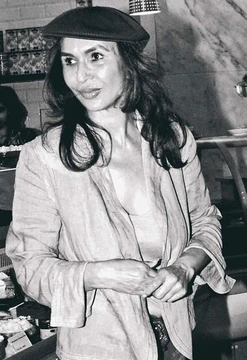
Barbara Hutton
Heiress, socialite, and philanthropist with a famously troubled private life.

Barbara Woolworth Hutton (November 14, 1912 – May 11, 1979) was an American debutante, socialite, heiress and philanthropist. She was dubbed the "Poor Little Rich Girl"—first when she was given a lavish and expensive debutante ball in 1930 amid the Great Depression and later due to a notoriously troubled private life. Heiress to one-third of the estate of her grandfather, the retail tycoon Frank Winfield Woolworth, Barbara Hutton was one of the wealthiest women in the world.
- born
- November 14, 1912, New York City
- died
- May 11, 1979
- field
- Socialite, philanthropist
- nationality
- American (later Danish for tax purposes)
- known_for
- Heiress to Woolworth fortune; seven marriages; 'Poor Little Rich Girl'
Verified Timeline
Lore & Background
Barbara Hutton was the only child of Edna Woolworth and Franklyn Laws Hutton. After her mother died on May 2, 1917, from suffocation due to mastoiditis—though rumors of suicide by poison persisted—four-year-old Barbara discovered her mother's body, a trauma that haunted her for the rest of her life. She was raised by a governess and lived with various relatives, including a time with her aunt Marjorie Merriweather Post. Her father administered her inheritance, which by her 21st birthday in 1933 had grown to $42 million, not including an additional $8 million from her mother's estate, making her one of the wealthiest women in the world. Her 1930 debutante ball, costing $60,000 during the Great Depression, drew severe public criticism and prompted a tour of Europe. Hutton married seven times, often to men who exploited her wealth. Her first husband, Alexis Mdivani, was a self-styled Georgian prince whose sister engineered their marriage after a scandal. Her second husband, Count Kurt von Haugwitz-Hardenberg-Reventlow, subjected her to verbal and physical abuse, escalating to a savage beating that left her hospitalized and put him in jail. He persuaded her to give up her American citizenship and take Danish citizenship for tax purposes in December 1937. She had one child, Lance Reventlow, with Reventlow; a bitter custody battle followed their divorce. Hutton later developed anorexia nervosa. She married actor Cary Grant in 1942, divorcing in 1945. Subsequent husbands included Prince Igor Troubetzkoy, Porfirio Rubirosa, Baron Gottfried von Cramm, and Pierre Raymond Doan. Hutton's life was marked by lavish spending and exploitation by those managing her estate, bringing her near bankruptcy. Her son Lance died in a 1972 plane crash, leaving her devastated. She took refuge in drink, drugs, and playboys, and remained deeply insecure despite public envy of her beauty and possessions.
Reader's Guide
Barbara Hutton's significance lies in her embodiment of the paradox of immense wealth and personal tragedy. Her seven marriages, many to fortune hunters, and her struggles with anorexia, substance abuse, and custody battles highlighted the vulnerabilities of even the richest individuals. Her philanthropy during World War II—donating her yacht to the Royal Navy, supporting Free French Forces, and selling war bonds—showed a capacity for public good, but her private life remained chaotic. Hutton's story continues to fascinate as a study in the intersection of wealth, fame, and human frailty, and her 'Poor Little Rich Girl' label has become a cultural archetype. Her legacy is a reminder that financial fortune does not guarantee emotional well-being, and that public envy often masks private suffering.
Did You Know?
- Barbara Hutton discovered her mother's body at age four after her mother died from suffocation due to mastoiditis; rumors of suicide by poison have persisted.
- Her 1930 debutante ball cost $60,000 during the Great Depression, drawing severe public criticism and forcing her to tour Europe.
- By her 21st birthday in 1933, her inheritance had grown to $42 million, not including an additional $8 million from her mother's estate.
- Her second husband, Count Kurt von Haugwitz-Hardenberg-Reventlow, gave her a savage beating that left her hospitalized and put him in jail.
- She donated her London home, Winfield House, to the U.S. government after World War II to be used as the official residence for the U.S. Ambassador.
More in Philanthropists And Socialites 1-23
Spotted an error? Know more?
This is a living reference — every entry is fact-audited, and reader corrections feed straight into our audit queue. Suggest an edit · See this site's audit record